Algae in the Baltimore Harbor: Waiting for the Other Shoe to Drop
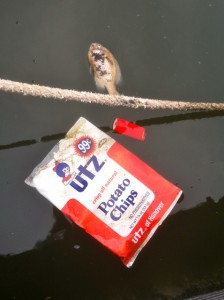
In the United States we are blessed to have tremendous protections afforded to us by the Clean Water Act and other Federal and state environmental laws. Citizens of other nations lack the most basic legal protection preventing sewage or untreated industrial waste from contaminating their drinking water and natural resources. However, great legal protections do not equate with great protection – the enforcement failures of the Clean Water Act, now 40 years after its passing, have left us with waters which are often still unfit for fishing, drinking, and the merest bodily contact, let alone swimming.
Here in the Baltimore Harbor, the past few weeks have demonstrated this clearly. Between April 18th and May 2nd of this year, we saw levels of chlorophyll a, which indicates the presence of algae, in the Northwest Branch of the Baltimore Harbor increase from an average level of 25 µg/L to 214 µg/L.
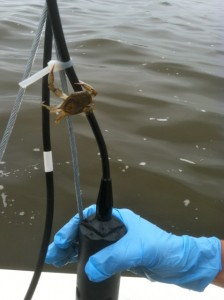
While the magnitude of this increase may not resonate with everyone, the visual results of this algal bloom were impossible to miss. On April 25th, while getting underway to conduct biweekly monitoring of the Patapsco’s Middle Branch, we noticed shocking changes in the clarity and color of the Harbor’s waters. In just the course of a week, we went from being able to see juvenile rockfish and blue crabs over a meter below the surface near where our boat is moored at Downtown Sailing Center to losing sight of our hands as we plunged them in less than 8 inches of the Harbor’s opaque brown water.
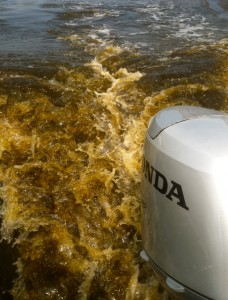
Over the next several weeks of monitoring the water quality of the Northwest and Middle Branches, we joked about how our water quality samples looked like refreshing bottles of iced tea sitting on ice in coolers aboard our boat or how, while passing the Domino Sugar plant, the Harbor smelled like cinnamon buns baked with dirty diapers and rotten seafood. Yes, decomposing algae really smell that bad…
Unfortunately, I knew what would happen next. It was with great sadness that I waited for the other shoe to drop: a fish kill throughout my watershed. An extended period of unusual drought throughout late winter and spring as well as an otherwise ordinary input of nutrients pollution (nitrogen and phosphorus) in the form of ongoing and episodic sewage overflows, industrial discharges, and commercial and residential applications of fertilizers resulted in the explosion of algae microorganisms and, correspondingly, with their eventual decomposition a rapid and severe depletion of dissolved oxygen throughout the Harbor.
The end result? Dead and dying Bay life-forms of all kinds: blue crabs and finfish gasping for air at the surface, dead grass shrimp washing up in large numbers on the shoreline, and fields of dead menhaden and other fish floating near Ft. McHenry.
With both excitement and trepidation I look forward to the execution of the Watershed Implementation Plans and the enforcement – fingers crossed – of the Chesapeake Bay TMDL. Can we meet our restoration goals by trading nutrients pollution across the Bay into underserved communities already bearing the brunt of industrial pollution? Can we save the Bay by subsidizing “green” industry or encouraging voluntary adoption of restoration practices?
This problem can be solved, and I suggest we start by repairing our leaking and broken water infrastructure and by holding polluters, ourselves and others amongst us, accountable for violations of the Clean Water Act and other environmental laws.
Because constantly waiting for the next shoe to drop is not a strategy that Baltimore can afford to adopt. Clean water and the health of our communities depend on us doing more than we have done.