Water Blog

News, notes and thoughts from Blue Water Baltimore.


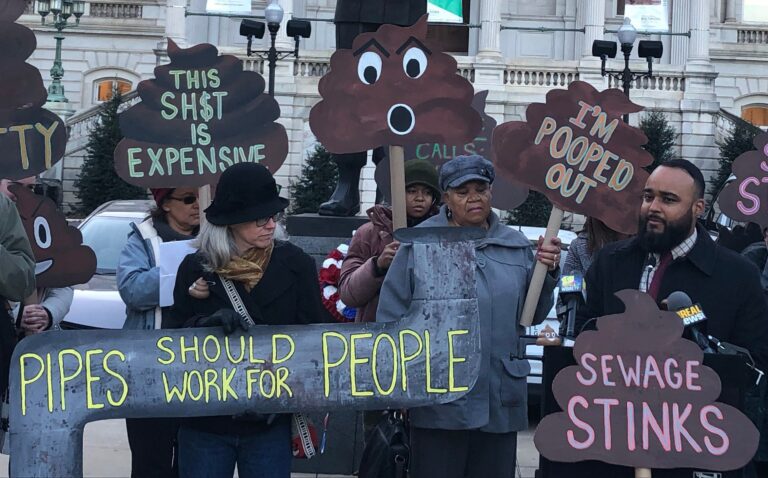
Baltimore needs a fair stormwater pollution reduction fee

June 6th, 2013 • Posted by Vincent Vizachero
Clean waterways, a healthy Inner Harbor and a restored Chesapeake Bay improve the quality of life in the city and region.

Clean waterways, a healthy Inner Harbor and a restored Chesapeake Bay improve the quality of life in the city and region.

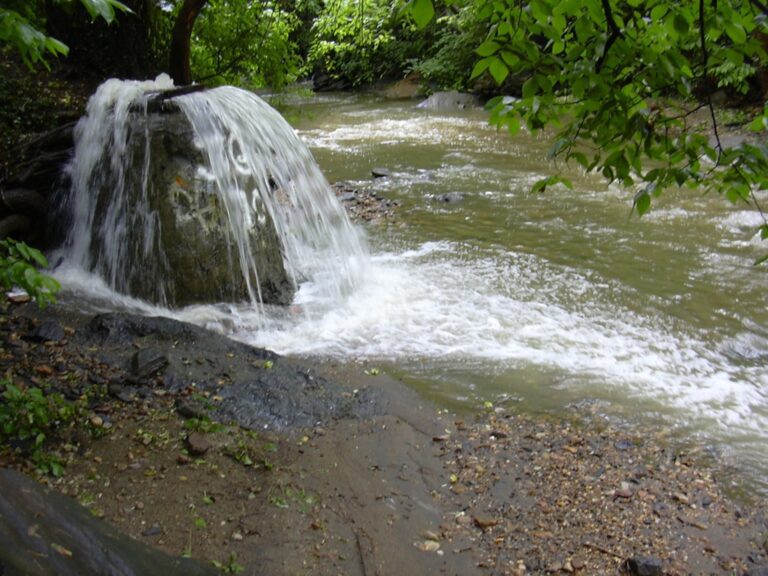
Stormwater runoff is a long-ignored and growing source of pollution and sediment—which hurts the quality of our streams, the harbor and the entire Chesapeake Bay—and causes flooding and property damage.  Our 2012 Healthy Harbor Report Card grade of C- illustrates the impact that stormwater pollution can have even in a relatively dry year.

Baltimore City officials are creating a fee on stormwater pollution to pay for critical improvements to the stormwater infrastructure.

Under Maryland law, Baltimore City and other jurisdictions must impose a water pollution reduction fee on owners whose properties create polluted stormwater runoff. The fee in Baltimore would be based on the amount of hard or paved services on a property.

For the average homeowner in Baltimore, the fee will be about $72 a year. Larger properties, with more paved surface, will incur a higher fee because larger properties produce more stormwater pollution.

Funds collected through the fee will be dedicated specifically to upgrading pipes and equipment and paying for job-creating projects that filter and clean water, such as planting trees and grasses, restoring streams, or installing rain gardens.

Baltimore needs a fair fee that will raise enough money to overhaul our stormwater system. The water pollution reduction fee will have a credit that encourages owners to reduce the pollution their properties cause and save on the fee. This credit would be available to homeowners, churches, businesses and other property owners.

Get Involved

If you support improving the health of our streams and making our communities safer and healthier, please contact your Baltimore City Council member before their June 11th meeting and tell them:

  1. It’s time for Baltimore to take major steps to fix its inadequate stormwater system.
  2. I support the utility fee on polluted stormwater runoff to pay for these urgently needed repairs.
  3. The fee should be applied fairly across the board to all property owners.
  4. The fee should have a credit that encourages property owners to take steps to reduce runoff from their properties; in doing so, they will improve the quality of our waterways and reduce the fee they pay.

To find your City Council representative, visit: http://www.baltimorecitycouncil.com/members.htm

More Information

Healthy Harbor and Blue Water Baltimore have created a set of documents that explain the water pollution reduction fee in more detail.  Click the links below to download and read these


Our 2012 Healthy Harbor Report Card is in!

June 4th, 2013 • Posted by David Flores

2012-Healthy-Harbor-Report-CardWe are excited to announce that the newly released Healthy Harbor Report Card 2012 contains our annual assessment for the Baltimore Harbor.  This year the Harbor received an overall grade of C-.

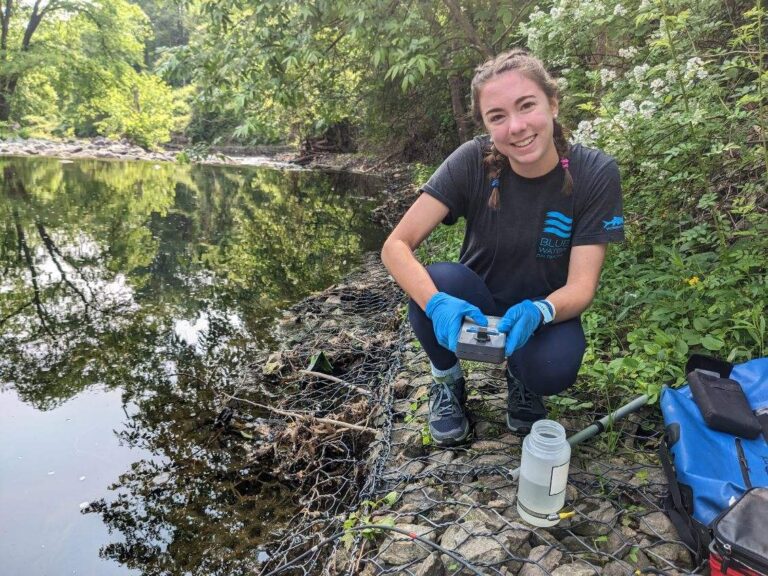
The Harbor’s grade, which is based upon 2012 monitoring data collected by the Baltimore Harbor Waterkeeper,  was higher than we expected.  Still, the Harbor met our ecological health thresholds only 40% of the time, which is just barely a C-.

This grade gives us hope that the Harbor’s water quality can be improved, but improvement is by no means a sure thing.  We must build on the momentum of ongoing efforts to clean up the Chesapeake Bay through reductions in stormwater runoff and the repair of failing sewage pipes and infrastructure.

This is the first year we have had the amount of data needed to produce an overall grade.  In previous years we relied on a single sampling site that provided a limited set of data.  Thanks to a grant from the Abell Foundation, we were able to expand our sampling program to 30 sites, which gave us our first comprehensive look at water quality throughout the Baltimore Harbor.

2012-Healthy-Harbor-Report-Card2

The 2012 Healthy Harbor Report Card includes a comprehensive map of water quality readings throughout the Harbor.

The complete report card provides  information about the ecological parameters we monitor , the condition of the Harbor’s water quality in 2012, and what restoration projects the watershed community has undertaken in the past year to get the Harbor closer to a grade of A. We encourage you to read the report card.

Also, we want to make our annual report cards more useful to you so PLEASE help us by filling out a short, 10-question survey.

How to Support a Bag Bill In Three Easy Steps

March 20th, 2013 • Posted by Vincent Vizachero
trash in streams

Plastic bags, along with bottles, are a major source of trash polluting our streams.

In the next week, there are important hearings about SB 576 / HB 1086, also known as the “Maryland Bag Bill,” to reduce the number of plastic shopping bags that litter our streams.

The bill establishes a five-cent fee for single-use plastic and paper carryout bags with the proceeds to be split among retailers, counties, and the Chesapeake Bay Trust.

We need to support our legislators as they work to get this important bill passed this year. There is a growing momentum behind the single-use bag fee, and we have a chance to make a real difference in protecting our streams!

In just three easy steps, you can send a quick email to your state Senator and Delegates to let them know that you are ready for Maryland to make this happen!

 1. Click this link to look up your Senator and Delegates.

2. Enter your address and click the “Create Message” button. Feel free to cut and paste our sample message below:

Please support SB 576 & HB 1086 the “Community Cleanup and Greening Act.” This bill will reduce litter and improve the quality of streams in Baltimore and communities around Maryland.

Every year, millions of dollars are spent by state and county governments to pick up plastic bags from our streets, to clean them out of storm drains, and to disentangle them from wastewater treatment facilities. Litter reduces property values and leads to an increase in vandalism, dumping, and other crimes.

SB 576 & HB1086 will make our communities healthier, safer places to live and do business. As a resident of your district I urge you to support it.

 3. Complete your message and click “Send.” It’s that simple!

The legislators in your district need to know that YOU want the bag bill, and they need to know this week. The power of all of us speaking in unison will make a difference, so add your voice right now.

Guest Post: Loyola Students Spring Break Outreach 2013

March 18th, 2013 • Posted by Vincent Vizachero

[Note: This guest blog post  was written by Emily Delaney,  a student at Loyola University Maryland. Emily led a Spring Break Outreach trip that included water quality testing in West Virginia coal country and ended with a day of volunteering at Herring Run Nursery.]

Students at WV Capitol

Loyola students in front of the West Virginia State Capitol, in Charleston.

Spring Break Outreach through Loyola University Maryland is a weeklong service immersion experience.

Eight different groups embark to eight different locations, with different themes and causes they are advocating for.

I had the privilege this year to lead this wonderful group of people to West Virginia for our immersion experience.

Our trip was focused on energy issues and environmental advocacy. Venturing to a state that combats every day the push and pull of environmental failures and triumphs on their own soil was overwhelming, but transformative nonetheless.

West Virginia landscape

West Virginia landscape

We began the week at Wheeling Jesuit where the Appalachian Institute resides. We met our amazing and inspiring trip leaders, Taylor Cameron and Ian O’bara, who are current juniors at Wheeling Jesuit. After gathering at Wheeling and participating in a pre-trip orientation, we drove two hours to Morgantown where we resided for a few days at a community center called “The Shack”.

While driving to Morgantown, we visited a small nonprofit organization located in Washington PA, called the Center for Coalfield Justice. Patrick Grenter presented us a presentation explaining that CCJ is a nonprofit team of four dedicated and driven attorneys and advocates.

They are seeking justice against the coal companies and for the West Virginian people, who need legal help or just a concerned advocate. We were educated about the injustices that take place against the people of West Virginia regarding their land and surroundings.

We finally arrived in Morgantown later that night at The Shack. We were warmly welcomed at The Shack, which was so much more than a community center. It provided a place for children to learn and thrive starting as early as 6:30 AM, all the way until about 10 PM.

After we settled into the shack, we awoke the next morning to visit Friends of Deckers Creek, which is an organization that is working to preserve the Deckers Creek Watershed.

acid mine drainage

Acid mine drainage is a major problem for West Virginia streams.

To test water quality, we went out to a few different streams and tested the PH level. Shockingly we found PH level of about 1.4 :  clean drinking water has a PH of about 7. Because of acid mine drainage resulting from coal plants and pollution run off in West Virginia, a lot of the water supplies are contaminated. Friends of Deckers Creek work to monitor the waterways and work to clean the water through treatment plants and filtration.

We were also privileged to visit their Outdoor Learning Classroom, which is used to show physically to the community the changes we can make in these imperative waterways.

Our next day we had the opportunity to meet and visit with James Anderson who is the Director of the Environmental Research Center at West Virginia University. He works with mountain reclamation through the use of biochar.

Once a mountaintop is mined and destroyed the coal companies are technically responsible for reclaiming the land they have disrupted. James Anderson works to reclaim the land with the use of biochar so that plants such as switch grass can grow and eventually be harvested.

After the biochar site we visited Chestnut Mountain Ranch, which is a boy’s home for at risk youth. They are not restricted by any state borders and have boys who come to them from 8:00 AM to 5:30 PM to participate in school and extracurricular activities. The ranch is in the process of building a residents hall for 7 boys at a time, which will have in home house parents.

This Christian-based organization is building all of these amazingly beautiful facilities debt free. They rely on donations of private and public donors, coca cola being one of them. We cleaned their property and help build the residence house for the better part of the afternoon.

This brought us to the middle of the week on Wednesday. We commuted back the Wheeling Jesuit and met with Chesapeake Energy, which is a fracking natural gas company. We learned about how fracking can be positive for our economy and provide economic benefits to the people whose land is being fracked. We also combatted some serious issues that fracking may cause to the environment. The presentation was extremely beneficial and informative.

482595_10151561747674048_1243859500_nThen, on our last day in West Virginia we commuted to the capital Charleston. We met with Delegate Mike Caputo in the morning who is a legislator for West Virginia, and a United Mine Worker. He educated us about the policy on coal and the culture it presents.

Delegate Caputo spoke to us about the lawsuit that was being filed and fought against Patriot coal. They are currently fighting to receive adequate healthcare in the future. We took a tour of the cultural center that was a museum depicting the entire history of West Virginia.

After we left the capital, we met with an organization called Keeper of the Mountains Foundation. They work to preserve the land of Kayford Mountain and fight against the coal companies to keep their land unmined. From the top of their property, you can see other mountain top removal sites that are currently under construction. This land belonged to Larry Gibson who passed away a year ago, but his mission of preserving his mountain will live on forever within the land of West Virginia.

Volunteering

Emily (left) volunteering at Herring Run Nursery.

Finally, we made our six-hour commute back to Baltimore and Saturday morning we had the privilege to work with Blue Water Baltimore at Herring Run Nursery. Our group was so excited to be able to work with a local organization working to preserve the water, which is a lot of what we had been working on all week in West Virginia.

We had a fantastic morning filled with smiles and enthusiasm. Everyone was so enthusiastic about moving the plants in and out and to different locations so that new plants can be brought in.

We are looking forward to being a continued partner with Blue Water Baltimore, and truly using our environmental passions to stay engaged with our Baltimore community.

Thank you so much to Vincent Vizachero for being such a gracious host and educator to our group about the water and environmental concerns that plague Baltimore’s watershed.

Winterberry: Native Shrubs That Multitask

March 6th, 2013 • Posted by Vincent Vizachero
Winterberry in snow

Winterberry holly is a star of winter landscapes. Photo: Muffet

At Herring Run Nursery our favorite native shrubs are ones that can multitask: they are beautiful, attract wildlife, and help reduce storm water pollution.

One of the very best of multitasking native shrubs is Ilex verticillata, or winterberry holly.

A gorgeous landscape plant, winterberry is a native deciduous holly. After the leaves drop in fall, the plant displays the gorgeous bright red berries we associate with hollies.

Branches loaded with the berries can be used in table arrangements or in wreaths, but the real joy comes in late winter or early spring when the birds swoop in to pick the bushes clean.

Winterberry is tolerant of both drought and wet soils, which makes it a good choice for rain gardens or stream banks.

Herring Run Nursery offers several cultivars of winterberry, with ‘Red Sprite‘ being one of the most popular for rain gardens because of its compact size.

Red Sprite winterberry

‘Red Sprite’ winterberry is a compact a variety for small yards or rain gardens. Photo: Missouri Botanical Garden

While ‘Red Sprite’ grows to a height of 3-5 feet, gardeners with more room might choose a larger variety. This year, Herring Run Nursery will also be offering ‘Winter Red‘ and ‘Maryland Beauty‘ both of which attain a more typical 6-8 feet in mature height and slightly more prolific fruit production.

Winterberry plants are dioecious, which means that individual plants are either female or male. The females produce the attractive berries, but only in the presence of a male plants.

It’s perfectly fine for females to outnumber males and the male plants need only be within 50 to 100 feet of the females, a fact that provides flexibility in the design of your landscape. Be sure to pick a male variety that blooms at the same time as the female, though. This chart should help:

Winterberry pollinator chart

Whether you want plants for a rain garden, a wildlife garden, or simply a more beautiful yard we think winterberry is a great choice.

Herring Run Nursery will have all these varieties available at our first nursery sale on April 6th.